
Technology
Beyond Visuals: What Turns a Corporate Website Into Commercial Infrastructure
Why sleek design is never enough on its own, and how aligning information architecture, UX, and backend API integrations transforms a company website into a revenue driver.
- Published
- Reading time
- 3 minutes

The scenario is familiar to almost every marketing director: a newly launched corporate website receives praise in the boardroom for its modern palette and sharp typography, but weeks into live campaigns, the metrics tell a sobering story. Bounce rates are high, lead capture forms sit idle, and qualified business inquiries fail to materialize.
This outcome is rarely accidental. It is the natural consequence of treating digital development as graphic design rather than commercial engineering.
Architecture Comes Before Appearance
When planning a corporate website or digital platform, jumping straight into visual mockups is the fastest way to build something that looks impressive but fails to function. Aesthetics cannot rescue a confused structure.
Commercial performance begins with site mapping and content architecture. The priority is identifying the critical questions an executive or enterprise decision-maker brings to the page: Does this firm solve my exact challenge? Do they understand my sector? What is the verifiable proof, and how friction-free is the next step?
When content hierarchy is planned around user intent rather than vanity filler, every landing page has a distinct job to do. Vague corporate mission statements give way to focused service framing, clear technical scope, and unambiguous calls to action.
Responsive Interfaces as an Operational Standard
In regional markets across Saudi Arabia and the Gulf, mobile usage dominates web traffic across both consumer and enterprise tiers. Yet, web design reviews are still routinely conducted on wide-format desktop monitors.
This oversight produces painful friction points: clickable elements squeezed too close together, lengthy lead qualification forms that frustrate mobile users, and slow-loading assets that exhaust user patience over mobile networks. Poor user experience (UX) burns advertising budget before visitors even read the company's value proposition.
Responsive interface design must be treated as a performance requirement. Layouts must adapt natively to every screen size, preserving legibility, fast interaction feedback, and effortless navigation without unnecessary cognitive load.
The Real Engine: APIs, Payments, and Data Flow
What sits behind the interface determines whether a website is an asset or an operational bottleneck. A modern company website must integrate cleanly with the internal systems that run the business.
Consider what happens when a prospect submits a project inquiry or completes a transaction. If that data remains trapped inside a site inbox waiting for manual export to a spreadsheet, time is lost and leads turn cold.
A web portal that requires manual data re-entry is an operational liability, not a digital transformation.
Robust platform development accounts for seamless API integrations from day one. Payment gateway handshakes, direct customer relationship management (CRM) synchronization, real-time inventory hooks, and tracking setups must be architected intentionally. When customer actions immediately inform backend pipelines, commercial velocity improves dramatically.
Dashboards and Customer Portals: Scaling Without Overhead
True digital utility extends behind the login screen. As businesses scale, managing client requests, bookings, and reporting over fragmented email threads consumes hundreds of billable hours.
Deploying custom digital platforms, dedicated client portals, and tailored internal management dashboards automates these interactions. Clients gain self-service transparency into their orders, project milestones, or support tickets. Concurrently, leadership gains unified oversight of pipeline velocity, conversion metrics, and system bottlenecks.
By unifying operational tools into purposeful web architectures, companies eliminate administrative friction and free their specialists to focus on high-value execution.
Setting the Right Criteria for Development
Building an enterprise-grade digital platform requires partners who examine technical stability, search foundation, and user workflows with the same rigor they apply to layout design.
A digital platform is not an online brochure meant to look finished and sit untouched. It is your primary sales channel, your brand's technical benchmark, and the anchor point for your digital acquisition. Approaching it with operational seriousness is what separates an ongoing expense from a durable competitive asset.
Related services
More reading
 Brand
BrandWhy Beautiful Brand Identities Fail the Second They Meet an Ad Campaign
Learn the practical difference between a brand identity built for mockups and an operable visual system engineered to perform across real-world ads, packaging, and digital platforms.
 Strategy
The Social Calendar Trap: Why Consistent Posting Alone Won't Grow Your Business
A social feed that posts daily without strategic intent burns your marketing budget in silence. Discover the real difference between filling a content calendar and running a conversion-focused social presence.
 Growth
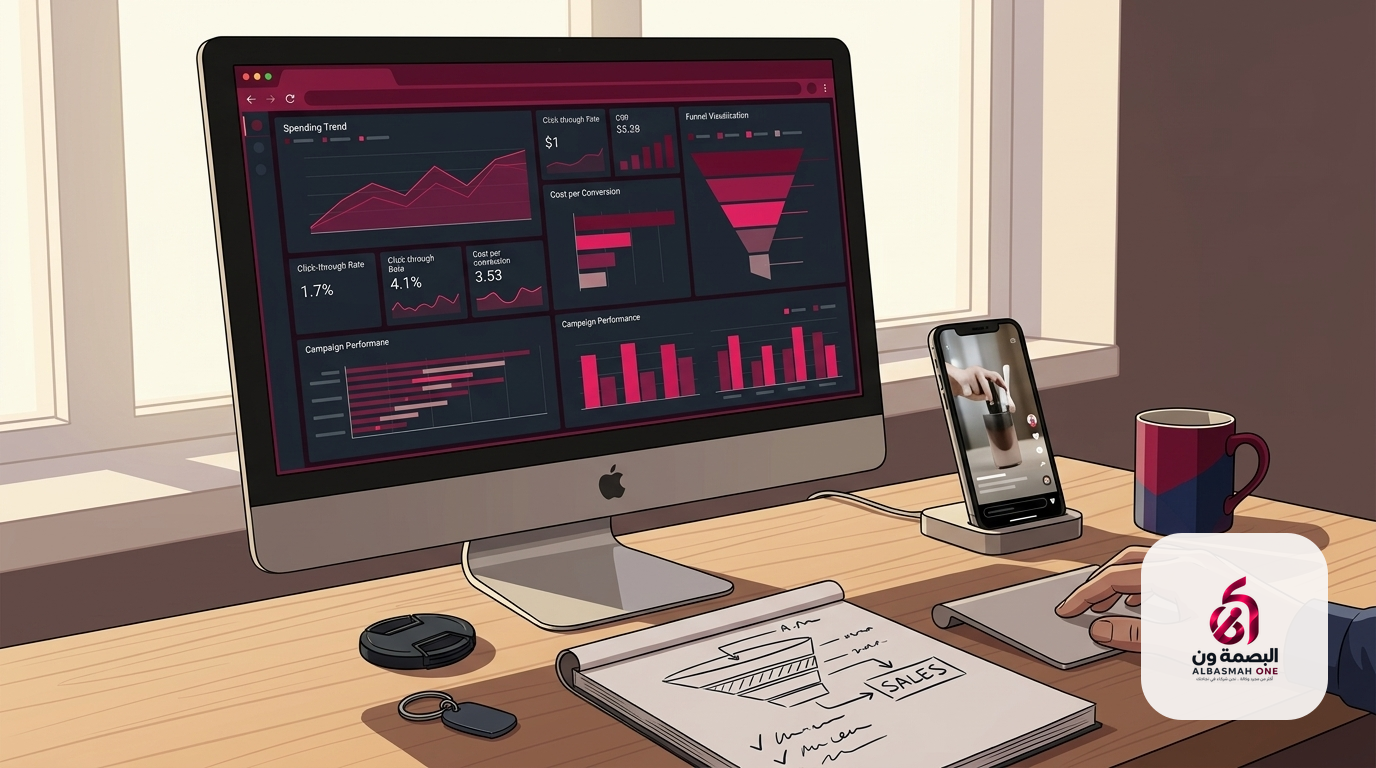
Why Paid Ads Drain Budgets Without Generating Sales
Discover why most paid ad campaigns fail to deliver real revenue and learn how to align targeting, ad creatives, and landing pages to cut customer acquisition costs and drive sustainable store sales.